
Ecommerce Trends 2027 in India: Why Ads Now Pay for Delivery
Quick commerce, retail media and ONDC will shape ecommerce trends 2027 in India. Our maths shows brands already spend ₹3 to ₹4 on ads for every ₹100 sold on quick commerce apps.

Quick commerce, retail media and ONDC will shape ecommerce trends 2027 in India. Our maths shows brands already spend ₹3 to ₹4 on ads for every ₹100 sold on quick commerce apps.
01Bain & Company puts India quick commerce GMV at $10 to $11 billion in 2025 and $65 to $70 billion by 2030.
02PingTalks estimates brands spent ₹3 to ₹4 on quick commerce ads for every ₹100 of quick commerce sales in 2025, against Blinkit’s 0.9% adjusted EBITDA margin in Q2 FY27.
03WPP Media expects India retail media to cross ₹30,000 crore in 2026, about 15% of total ad revenue.
04Blinkit had 2,751 dark stores at the end of September 2026 and targets more than 3,500 by March 2027.
Swiggy is cutting 340 roles at Instamart, Business Standard reported on 27 November 2026. A day earlier came word that ONDC will pilot a four-hour delivery network in Delhi. Put those two stories next to each other and the biggest of the ecommerce trends 2027 will bring in India is plain: online retail is becoming an advertising business, and fast delivery is how it gets you in the door.
That’s our thesis, and the rest of this piece tests it. Quick commerce keeps taking urban baskets and moves into smaller cities. Retail media decides who gets seen on those apps. ONDC stays a side bet for most brands. If you plan Blinkit, Flipkart and Amazon as ad channels and not just shelves, your 2027 budget will be closer to reality than your competitor’s.
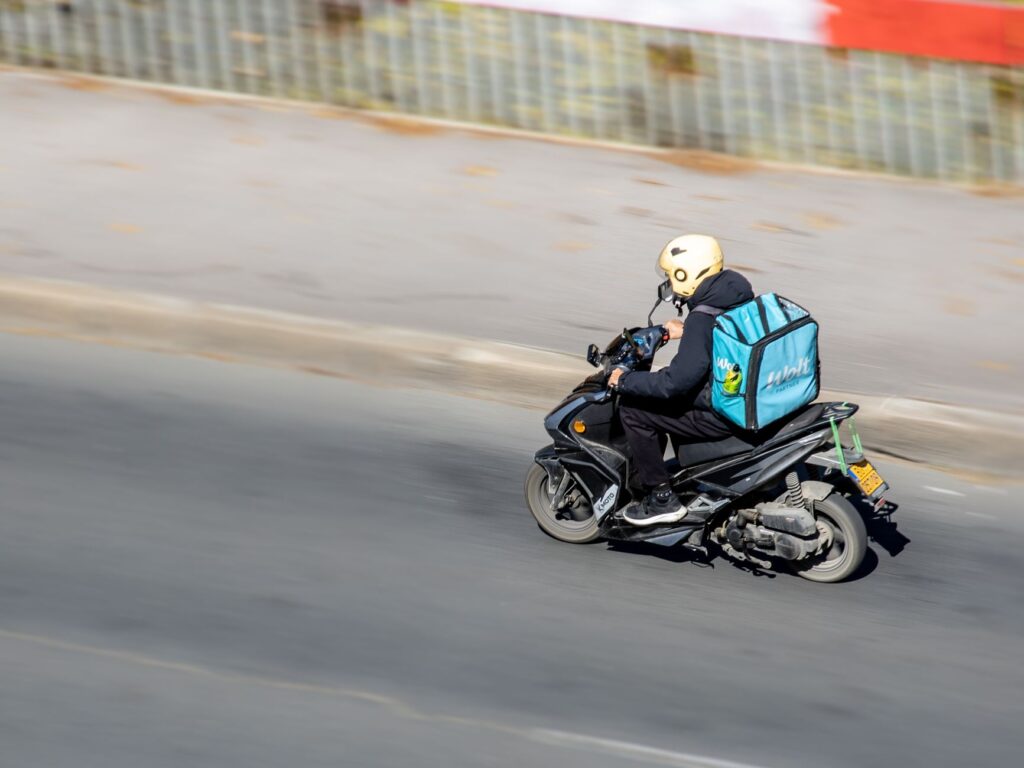
Five shifts matter most for Indian marketers in 2027. Quick commerce takes a bigger share of online spend. Retail media ads become the main way to be seen on shopping apps. Tier 2 cities drive most new orders. AI assistants enter product research. And ONDC tries a slower model built on local stores.
| Trend | What the data says | What it means for your 2027 plan |
|---|---|---|
| Quick commerce scale | $10 to $11 billion GMV in 2025, doubling every year (Bain) | Treat Blinkit, Instamart and Zepto as a core channel for essentials |
| Retail media | Above ₹30,000 crore in 2026, about 15% of ad revenue (WPP Media) | Give it its own budget line and its own ROAS target |
| Tier 2 and beyond | About half of new orders in 2025 (Bain) | Hindi and regional listings, smaller packs, cash-light offers |
| AI shopping assistants | ChatGPT has over 160 million monthly users in India (Bain) | Rewrite product pages so an assistant can compare you fairly |
| ONDC | 500 million transactions in total, mostly mobility | Watch the Delhi pilot; don’t put budget behind it yet |
Quick commerce should pass ₹2 lakh crore in gross value in 2027 if it grows at the pace Bain & Company forecasts. Bain’s How India Shops Online 2026 report, written with Flipkart, puts 2025 GMV at $10 to $11 billion and 2030 at $65 to $70 billion, about 45% a year.
Bain also expects quick commerce to supply 45% to 50% of all new e-retail value over the next five years. That’s the single biggest reason it tops any list of 2027 ecommerce trends.
The store race is where 2027 gets decided. Eternal raised Blinkit’s target from 3,000 stores to more than 3,500 by March 2027, and about 5,000 by March 2028. Albinder Dhindsa, Blinkit founder and Eternal CEO, said new stores in smaller cities reach 1,000 orders a day in about the same time as metro stores. Eternal CFO Akshant Goyal said those stores are on track for margin and payback.
For a brand, that means your quick commerce distribution in Lucknow, Indore or Coimbatore in 2027 could look like your Bengaluru distribution did in 2025.
We divided quick commerce ad spend by quick commerce sales to see how ad-heavy the channel already is. The Pitch Madison Advertising Report 2026 puts quick commerce ads at ₹4,000 crore in 2025. Datum Intelligence puts the top three apps’ ad revenue nearer ₹3,000 crore.
At ₹94 to the dollar, close to where the rupee traded in November 2026, Bain’s 2025 GMV of $10 to $11 billion is ₹94,000 crore to ₹1,03,400 crore. So brands spent between ₹3 and ₹4 on ads for every ₹100 shoppers spent on these apps.
Now compare that with Blinkit’s profit: an adjusted EBITDA margin of 0.9% of order value in Q2 FY27. Industry ad spend runs at three to four times the market leader’s entire margin. Without brand ad money, the 10-minute promise would not pay for itself.
Projecting forward (our estimate, not a published forecast): if GMV grows at Bain’s 45% pace and ad intensity holds near 4%, quick commerce ads reach roughly ₹8,000 to ₹8,500 crore in 2027, up from the ₹6,000 crore Madison projects for 2026.
In 2027 you won’t buy a spot on the shelf. You’ll rent the top of the search results, one auction at a time.
Yes, if you sell in categories people search for on shopping apps and you know your break-even ROAS. Retail media puts your ad where the purchase happens, so results are easier to measure than social ads. It’s a poor fit if your margin is thin and your product needs explaining first.
The money is already there. WPP Media’s This Year Next Year forecast has retail media crossing ₹30,000 crore in 2026, about 15% of India’s ad revenue. Madison counted ₹10,257 crore of e-commerce platform ads in 2025, up 27%. Zepto’s IPO filing shows ad revenue up 151% to ₹1,636 crore in FY26, over 7% of its operating revenue. Our India Ad Spend 2026 breakdown has the full split by platform.
Platforms now want smaller sellers spending too. Flipkart launched Saarthi in August 2026: an AI campaign dashboard plus free access to certified agencies. Vijay Iyer, vice president of Flipkart Ads, framed it as closing the expertise gap for sellers. Meesho went further and chose seller ads over a platform fee as its next revenue source.
Worked example: a ₹400 snack box that leaves you ₹120 after the platform’s margin and delivery costs needs a ROAS of at least 3.3x (400 ÷ 120) on ad-driven orders just to break even. Set that number before your first campaign, not after.
Swiggy is trying to make Instamart profitable before the next store race. It will move Instamart to an inventory-led model from mid-Q3 FY27, over two to three quarters. The 340 job cuts, reported by Business Standard on 27 November 2026, are part of a reorganisation for that phase.
The numbers explain the urgency. Instamart’s gross order value rose 31% to ₹9,230 crore in Q2 FY27, but its adjusted EBITDA loss widened to ₹895 crore. Swiggy says losses have now peaked. Blinkit, meanwhile, is profitable at the EBITDA level and growing faster.
Our read for brands: when a platform owns the stock, it chooses which SKUs to buy. Expect tighter range reviews and more pressure to back your listing with ad spend in 2027.
For most consumer brands, not yet. ONDC crossed 500 million transactions in July 2026, but most of its volume comes from mobility, such as metro tickets and ride-hailing. Retail orders fell to 3.76 million in August 2025 from 6.1 million a year earlier, and ONDC hasn’t published monthly figures since.
The new pilot is worth watching anyway. NearU, reported by MediaNama on 26 November 2026, sends an online order to nearby physical stores within 4 to 5 km. It starts with electronics in parts of Delhi, about 70 to 80 outlets including Hotspot, and promises four-hour delivery for phones. A later phase adds reverse bidding, where a buyer names a price and local retailers can match it.
If you run offline electronics or appliance stores, sign up to hear about it. If you’re a D2C brand, ONDC shouldn’t be in your 2027 media plan.
AI assistants will shape the research before the purchase, not the purchase itself, at least through 2027. Bain found that Indians use tools like Amazon’s Rufus, Flipkart’s conversational engine and ChatGPT Instant Checkout mainly to compare products. That makes your product data the new shelf talker.
ChatGPT alone has over 160 million monthly users in India, its second-largest market, according to Bain. Product pages with clear specs, sizes, ingredients and honest comparisons are what an assistant can quote. Our SEO trends 2027 guide covers how to structure them, and AI trends 2027 covers the DPDP rules that apply from May 2027.
From Tier 2 and smaller cities, and mostly from Gen Z. Bain counts 290 to 300 million online shoppers in India, with Tier 2+ cities adding about half of all new orders in 2025. Shopper penetration there is only 25% to 30% of internet users, against 45% to 50% in metros.
Gen Z already makes up 40% to 45% of e-retail shoppers, and Bain says they discover products through creators and short video. That’s why social media trends 2027 and your marketplace plan now belong in the same meeting.
Ad-funded retail has a ceiling. If sponsored slots crowd out the products shoppers actually want, conversion drops and brands pull money back. Instamart’s losses show the model is not proven for number two and three players, and Bain notes two-thirds of new dark stores still open in the top 10 cities.
Forecasts also disagree. Bain sees $170 to $180 billion of e-retail GMV by 2030; BCG sees $280 to $300 billion of e-commerce. They measure different things, so don’t build a plan on any single number, ours included.
Plan 2027 around two numbers: your break-even ROAS and your quick commerce reach in Tier 2 cities. Put retail media in its own budget line, starting at 10% to 15% of digital spend if you sell everyday products. Test one quick commerce app deeply before spreading thin. Skip ONDC unless you run physical stores. Brands with high-consideration products and thin margins should ignore the quick commerce rush entirely.
More forecasts for the year ahead are on our 2027 Trends hub.
Indian ecommerce in 2027 will be led by quick commerce, retail media ads and growth from Tier 2 cities. Bain & Company expects quick commerce alone to supply 45% to 50% of new e-retail value over the next five years.
Bain & Company estimates India quick commerce GMV at $10 to $11 billion in 2025, about ₹94,000 crore to ₹1,03,400 crore at ₹94 to the dollar. Bain projects $65 to $70 billion by 2030.
Blinkit is profitable at the adjusted EBITDA level, with a 0.9% margin on order value in Q2 FY27. Swiggy Instamart posted an adjusted EBITDA loss of ₹895 crore in the same quarter and says losses have peaked.
The Pitch Madison Advertising Report 2026 puts quick commerce ad spend at ₹4,000 crore in 2025 and projects ₹6,000 crore in 2026. PingTalks estimates about ₹8,000 to ₹8,500 crore in 2027 if current growth holds.
ONDC crossed 500 million cumulative transactions in July 2026, but most volume comes from mobility such as metro tickets. Retail orders fell to 3.76 million in August 2025, and ONDC has not published monthly figures since.
Retail media is advertising sold by shopping platforms such as Amazon, Flipkart, Blinkit, Zepto and Instamart, shown where shoppers search and buy. WPP Media expects it to cross ₹30,000 crore in India in 2026.

Digital Evangelist and Entrepreneur at Clickseek Digital. A results-oriented marketing leader with an 18+ year track record driving transformative growth for diverse global businesses. Expert in performance marketing, demand generation, customer acquisition, strategic partnerships, and market expansion within B2B SaaS, Consumer-Tech, Fintech, Travel/Hospitality, and CRM/ITES Solutions sectors. IIM alumnus with a strong analytical background and a string of accolades, including "Top 50 Most Influential E-Commerce Professional of India" and "Top 100 Digital Marketer of India."
What changed in marketing and AI, why it matters and exactly what to do. In your inbox at 11:00 IST.