


Tiqs Case Study: WhatsApp AI Agent Lifted Signups 2.3X
Indian broker Tiqs used a step-aware WhatsApp AI agent to rescue stalled KYC signups. We break down the numbers, the per-chat cost in rupees, and what to copy.


Indian broker Tiqs used a step-aware WhatsApp AI agent to rescue stalled KYC signups. We break down the numbers, the per-chat cost in rupees, and what to copy.
01Tiqs, an Indian discount broker, reported a 2.3X higher completion rate across its 18-step signup for applicants who used a Zigment AI agent on WhatsApp between 1 April and 31 May 2026.
02The Tiqs agent messaged applicants about the exact verification step they were stuck on, such as PAN, Aadhaar or bank linking, and escalated only complex cases to humans.
03Under Meta pricing effective 1 October 2026, a WhatsApp rescue chat of one utility template and five service replies costs about ₹0.81 in Meta fees including GST in India.
04Zigment’s own Tiqs case study reports different figures from Meta’s, so marketers should treat the results as self-reported and run a holdout test before relying on them.
Tiqs stopped phoning every applicant who quit its signup. The Indian discount broker put an AI agent on WhatsApp that knew which of the 18 verification steps each person was stuck on, and Meta’s published case study credits it with a 2.3X higher completion rate between 1 April and 31 May 2026.
That number deserves a closer look than most WhatsApp AI agent case studies get. Below we break down what Tiqs changed, what one rescue conversation costs under Meta’s October 2026 pricing, why the vendor’s own version of the story uses different figures, and how any Indian brand with a long signup or KYC form can copy the useful part.
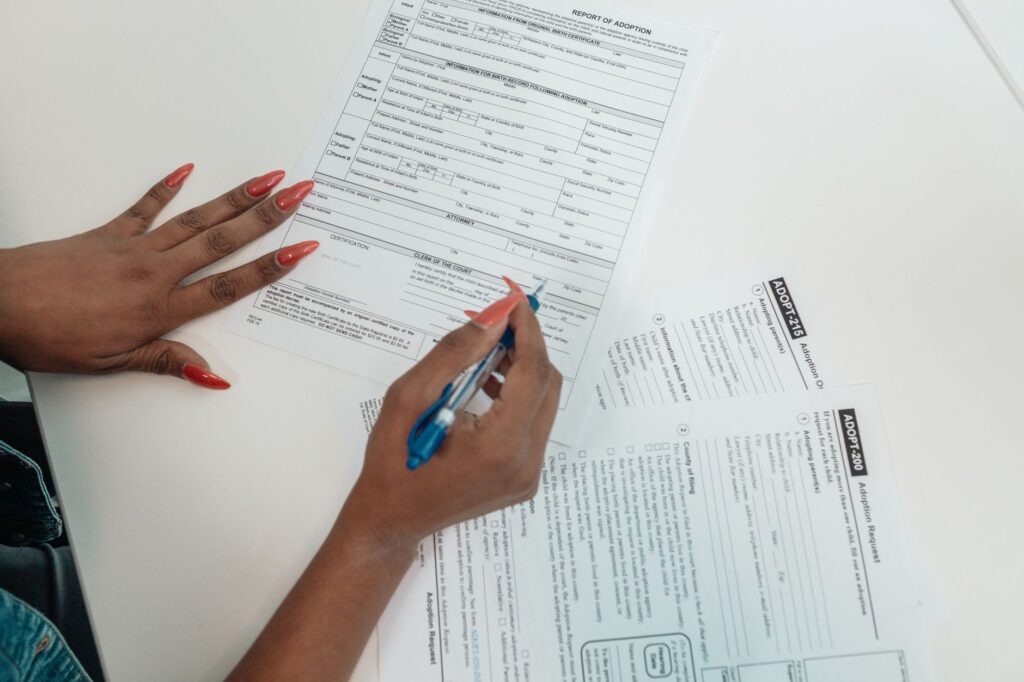
Tiqs connected an AI agent built by Bengaluru startup Zigment to its onboarding system, customer records and support desk. When an application stalled, the agent opened a WhatsApp chat about that exact step, read screenshots and voice notes, replied in the applicant’s language and only escalated cases that needed a human.
The stalls were predictable. Tiqs is run by Butterfly Broking Private Limited, a SEBI-registered broker, so its signup leans on outside systems: PAN checks that fail or show the PAN linked elsewhere, Aadhaar codes that never arrive, and account aggregators that can’t find the right bank. Each one ends in a generic error screen.
Before the agent, recovery was blunt. Co-founder Srini Sharma told Meta that “we were calling every single person who dropped off.” After it, he said, the agent “changed the economics of that.”
Meta’s page says the biggest gains came at the two external verification steps. That fits the logic: a fix sent while the applicant is still holding the phone beats a call that lands hours later.
Strip away the AI label and the change is about timing and context. Here is the old recovery model next to the new one, built from the details in Meta’s write-up.
| Stage | Before | After |
|---|---|---|
| Who gets contacted | Every applicant who dropped off | Every stalled applicant, by WhatsApp first |
| What they hear | A generic “can we help?” call | A message about their specific failed step |
| How they reply | Explain the error on a call | Text, an error screenshot or a voice note, in their language |
| Where humans work | All drop-offs | Only tickets the agent escalates, with a confirmed callback time |
The applicant also resumes from the saved step rather than starting again. For a broker, insurer or lender, that one detail matters as much as the chat itself.
The win is not the bot. It’s knowing which step broke before you say hello.
Under Meta’s rates effective 1 October 2026, a rescue chat with one utility template and five service replies costs about ₹0.81 in Meta fees including 18% GST. Using Meta’s own Business Agent for those replies costs far more: roughly ₹22 to ₹28 per conversation at Meta’s token estimate.
Our maths. Meta now charges per delivered message. In India, utility and service messages are ₹0.115 each and marketing is ₹0.8631, before GST. Service replies are free only for the first 1,000 per phone number per month since 1 October 2026. A business-initiated message to a stalled applicant falls outside the 24-hour window, so it has to be an approved template.
Now the saving. Take 10,000 drop-offs a month. An 80% cut in drop-offs needing a call removes 8,000 calls. Tiqs has not published its call cost, so plug in your own. We show three cost-per-call assumptions.
| Your cost per recovery call (assumed) | 8,000 calls saved | Left after ₹8,100 Meta fees | Max vendor fee per chat to break even |
|---|---|---|---|
| ₹10 | ₹80,000 | ₹71,900 | ₹7.19 |
| ₹25 | ₹2,00,000 | ₹1,91,900 | ₹19.19 |
| ₹50 | ₹4,00,000 | ₹3,91,900 | ₹39.19 |
That last column is the number to take into any vendor pitch. If a quote per conversation sits above it, the agent only pays through extra completed signups, not saved calls.
Watch the category: keep the rescue template strictly about the applicant’s pending step. Add an offer or a “trade now” nudge and Meta can classify it as marketing, which costs 7.5 times more in India.

Zigment’s own Tiqs case study tells a different version: a nine-step flow instead of 18, onboarding completion rising from 12% to 26%, and an 80% cut in call-centre and support workload. Meta’s page reports multipliers against non-users and an 80% fall in drop-offs needing calls. Same project, different yardsticks.
Neither is necessarily wrong. A vendor may count steps differently, and “12% to 26%” can describe the whole funnel while “2.3X” compares agent users with non-users. But they are not interchangeable, and Meta’s footnote says the results are self-reported and not identifiably repeatable.
There is a bigger catch. Comparing people who chatted with the agent against people who didn’t flatters the agent, because applicants who reply are already more motivated. The fair test is a holdout: randomly hold back a slice of stalled applicants from the agent and compare completion. Neither page says Tiqs ran one.
Small print we checked: Meta’s page calls Caleb Peter a Zigment co-founder. Zigment’s About page lists him as Head of Growth, with Dikshant Dave as CEO. Peter’s point still stands: Zigment’s agents “know the exact stage someone has reached.”
Yes, for simpler funnels. Meta launched Business AI in the WhatsApp Business app for eligible Indian small businesses in May 2026, with setup under Tools and then Your Business AI. It answers queries, books appointments and works in Indian languages, but it can’t see a custom KYC backend.
Two Meta case studies show the ceiling. Saachi Japanese Language Institute in Bengaluru used Meta Business Agent with a connected calendar from 19 August to 2 September 2026: 31% of inquiries became booked consultations and 33% of the calls held led to enrollment. CEO K P Ravi Kumar said “the appointment link was the real change.”
Bridal makeup artist Madhulika Vikram’s business reported 40 requests in two weeks, 15% converting to appointments and an 8X return. Small numbers, but honest about the scale. Ravi Garg, Director of Business Messaging at Meta India, pitched Business AI as a way to “never miss a customer query outside business hours.”
Start with your funnel data, not the chatbot. You need to know where people stop, why, and whether they opted in to WhatsApp messages. Then build the smallest version that fixes your single worst step.
If you’re picking a provider, our comparison of AiSensy, Interakt and Wati pricing has the per-message markups. If templates start failing, check our fix plan for WhatsApp error 131049 before blaming the agent.

Copy the mechanism, not the multiplier. A step-aware rescue message is the cheapest conversion fix available to any Indian brand with a regulated or multi-step signup: brokers, insurers, NBFCs, edtech, even D2C brands confirming COD orders. Skip it if your drop-offs are under a few hundred a month; a person with a script will do. And don’t quote 2.3X to your CFO until your own holdout test agrees.
For the wider channel picture, see our WhatsApp marketing playbook for India, and for consent rules, our explainer on the DPDP consent manager deadline.
Meta’s case study reports a 2.3X higher completion rate across 18 steps, 2.9X more applicants reaching final documentation and 80% fewer drop-offs needing a call. The results cover 1 April to 31 May 2026 and are self-reported.
Zigment, a Bengaluru company founded in 2023, built the agent. It connected to Tiqs’s onboarding system, customer records and support desk.
Meta charges ₹0.115 per service message in India after the first 1,000 free per phone number per month, from 1 October 2026. GST of 18% is added on top.
Not per message. Meta prices Business Agent at $2 per million tokens, about 4 to 5 US cents a message, which is far above the ₹0.115 service rate. A third-party bot adds its own fee, so compare the total per conversation.
Only if they opted in to WhatsApp messages. Outside the 24-hour window you must use an approved template, and a non-promotional reminder about their pending step fits the utility category.

Digital Evangelist and Entrepreneur at Clickseek Digital. A results-oriented marketing leader with an 18+ year track record driving transformative growth for diverse global businesses. Expert in performance marketing, demand generation, customer acquisition, strategic partnerships, and market expansion within B2B SaaS, Consumer-Tech, Fintech, Travel/Hospitality, and CRM/ITES Solutions sectors. IIM alumnus with a strong analytical background and a string of accolades, including "Top 50 Most Influential E-Commerce Professional of India" and "Top 100 Digital Marketer of India."

What changed in marketing and AI, why it matters and exactly what to do. In your inbox at 11:00 IST.