


What Is Digital Marketing? Channels, Strategy, India Guide (2026)
Every channel, the funnel, strategy, budgets, lead generation, measurement and a 90-day plan, written for Indian marketers and founders.


Every channel, the funnel, strategy, budgets, lead generation, measurement and a 90-day plan, written for Indian marketers and founders.
01Digital marketing is promotion through internet channels such as search, social media, email, WhatsApp and AI assistants, with every result measurable.
02A digital marketing strategy works best with two or three channels: one to capture demand, one to create demand and one owned channel.
03TRAI data shows 1,021.43 million of India’s 1,087.50 million broadband subscribers used mobile wireless access at the end of June 2026, so Indian campaigns must be built for phones first.
04Google Analytics 4 offers three attribution models (data-driven, paid and organic last click, Google paid channels last click) after removing rule-based models in November 2023.
Digital marketing is the promotion of a product, service or brand through internet channels: search engines, social media, websites, email, messaging apps like WhatsApp, marketplaces and now AI assistants. It works because every click, view and message can be targeted, measured and improved, which traditional media cannot match.
This guide covers every channel, the marketing funnel, how to build a digital marketing strategy step by step, how to split a budget, how to generate leads, how to measure results in GA4, and what changes when your buyers are in India. It ends with a 90-day plan you can start on Monday.
Digital marketing is any marketing that reaches people through a screen and an internet connection. It includes earning visibility (SEO, content, social posts), paying for it (search, social and display ads), and owning it (email lists, WhatsApp opt-ins, your website). The goal is the same as all marketing: get the right person to take the next step.
People also call it online marketing or internet marketing. The difference from print, TV or hoardings is feedback speed. A newspaper ad tells you nothing for weeks. A Google Ads campaign tells you within hours which keyword produced an enquiry and what it cost.
That speed changes how you work. You stop guessing and start testing. Small budgets can compete, because you pay to reach a narrow audience instead of everyone in a city.
Digital marketing works in a loop: you reach a defined audience on a channel, send them to a page or chat where they can act, track what they do, and move budget towards whatever produces customers at an acceptable cost. Each loop teaches you something about your audience, your offer and your channels.
Think of three kinds of media. Owned media is what you control: your website, app, email list and WhatsApp audience. Earned media is attention you do not pay for directly: rankings, shares, reviews and press. Paid media is advertising. Strong businesses use paid media to fill owned media, so they rent attention once and keep the relationship.
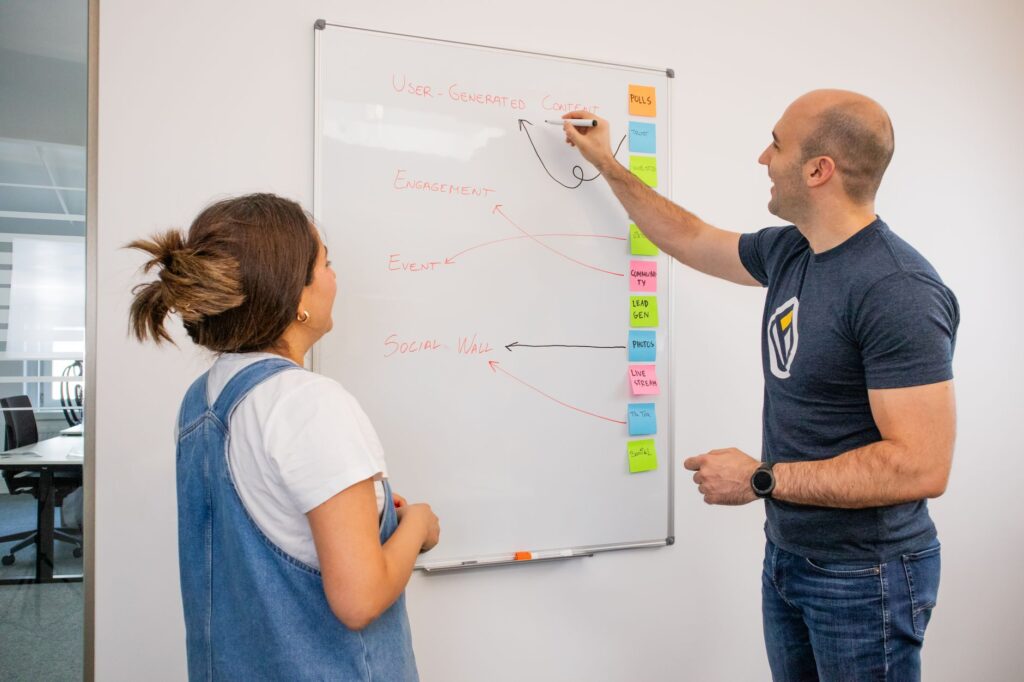
The main digital marketing channels are search engine optimisation, paid search, social media, content marketing, email, WhatsApp and messaging, affiliate marketing, influencer marketing and AI search. Most businesses need three or four of these done well, not all nine done badly. Pick by where your buyers already spend time.
| Channel | Best for | Speed to results | Main cost |
|---|---|---|---|
| SEO | Capturing existing demand | Slow (months) | Content and technical time |
| Paid search | High-intent buyers now | Fast (days) | Media spend per click |
| Social media (organic and paid) | Creating demand, retargeting | Medium | Creative production and spend |
| Content marketing | Trust and education | Slow | Writers, designers, video |
| Repeat sales, nurture | Fast once a list exists | Tool and list building | |
| Conversations, repeat orders | Fast | Per-message charges | |
| Affiliate | Paying only for results | Medium | Commission per sale |
| Influencer | Reach and social proof | Fast | Fees or free product |
| AI search | Being cited in AI answers | Slow | Content and authority |
SEO earns you free, ongoing visibility when people search Google for what you sell. It covers technical health, content that matches search intent, and links from other sites. SEO in digital marketing is the slowest channel to start and often the cheapest per customer once it works. Start with our complete SEO guide for beginners.
Paid search puts your ad above results for keywords you choose, and you pay per click. It reaches people at the moment they want something, so it usually produces the fastest leads. The risk is paying for irrelevant clicks. Our Google Ads guide covers setup, bidding and Keyword Planner.
Social media marketing includes organic posting and paid digital advertising on Instagram, Facebook, YouTube, LinkedIn and others. Social is where demand gets created: people were not searching for your product until a Reel showed it to them. Read the social media marketing guide for organic growth and the Meta Ads guide for paid campaigns.
Content marketing means publishing useful articles, videos, guides and tools that your buyers want anyway. It feeds SEO, gives social something to share and gives sales a reason to follow up. The test is simple: would someone save this? Our content marketing guide covers strategy, blog writing and copywriting.
Email is owned media. Nobody can change an algorithm and cut your reach to zero. It works best for nurturing leads, onboarding customers and driving repeat purchases with automated sequences. Deliverability decides whether any of it gets seen, so read our email marketing guide before you send your first campaign.
WhatsApp is where many Indian buyers prefer to ask questions, confirm orders and get updates. Through the WhatsApp Business Platform, you can send templated broadcasts, run chatbots and connect Click to WhatsApp ads. Pricing changed again on 1 October 2026 (details below). Our WhatsApp marketing and Business API guide walks through setup.
Affiliate marketing pays partners a commission when their link or code produces a sale. You pay for outcomes, not reach, which makes it attractive for ecommerce and SaaS. The work is in recruiting good partners and stopping coupon sites from claiming sales you would have made anyway. Start with the basics of affiliate marketing.
Influencer marketing pays creators to feature your product to their audience. In India, the Advertising Standards Council of India (ASCI) expects any material connection to be disclosed upfront. ASCI’s guide for influencers counts free products, discounts and affiliate links as material connections, and says a label buried in hashtags or a bio is not enough (ASCI).
Buyers now ask ChatGPT, Gemini and Google’s AI Overviews for recommendations. Google Search Central says there are no extra requirements or special optimisations to appear in AI Overviews or AI Mode: pages must be indexed and eligible for a snippet (Google). That makes classic SEO the entry ticket. Our AI search optimization guide covers how to get cited.
A marketing funnel is the path a person takes from first hearing about you to buying and buying again. The usual stages are awareness, consideration, conversion and retention. Each stage needs different content, different channels and different metrics, and most businesses leak the most money between consideration and conversion.
| Stage | What the buyer thinks | Channels that fit | Metric to watch |
|---|---|---|---|
| Awareness | “I have a problem” | Reels, YouTube, influencers, display | Reach, video views, cost per 1,000 people |
| Consideration | “Who solves this best?” | SEO content, comparison pages, retargeting | Engaged sessions, returning visitors |
| Conversion | “Why buy from you now?” | Paid search, WhatsApp, landing pages | Conversion rate, cost per lead or sale |
| Retention | “Should I buy again?” | Email, WhatsApp, loyalty offers | Repeat rate, customer lifetime value |
The fix for a leaky funnel is rarely more traffic. It is a faster page, a clearer offer, fewer form fields or a WhatsApp button where people hesitate. Our conversion rate optimization guide shows how to find and fix the leak before you buy more clicks.
Performance marketing is advertising you judge by a measurable action, such as a lead, sale or install, and you optimise for cost per result. Brand marketing builds memory and preference so people choose you later, and you judge it by reach, recall and search demand for your name. You need both, in different proportions at different stages.
| Question | Performance marketing | Brand marketing |
|---|---|---|
| Goal | Action now | Preference later |
| Typical metric | Cost per lead, ROAS | Reach, branded search volume |
| Time to show results | Days to weeks | Months |
| Risk if used alone | Costs rise as you run out of ready buyers | Hard to prove what worked |
Here is the trap. Performance campaigns harvest people who already want to buy. When that pool runs dry, cost per lead rises and teams blame the platform. Brand work refills the pool. Watch your branded search volume in Google Search Console: if it is flat while spend grows, you are only harvesting.
Performance marketing harvests demand. Brand marketing plants it. A business that only harvests eventually runs out of crop.
You build a digital marketing strategy by setting one business goal, defining who you sell to, choosing two or three channels where those people already are, setting a budget and a target cost per customer, then testing, measuring and reallocating every month. A strategy is a set of choices about what you will not do as much as what you will.
A good marketing strategy fits on one page. If yours needs a 40-slide deck to explain, it is probably a list of tactics, not a set of choices.
Spend what your unit economics allow: start from the maximum you can pay to acquire a customer, multiply by the customers you need, and add a testing reserve. There is no correct percentage for every business. A ₹500 product and a ₹50 lakh apartment need completely different budgets, even with the same revenue target.
Instead of a borrowed benchmark, use the PingTalks 3-bucket split. Adjust the shares to your stage, then let results move money between buckets each quarter.
| Bucket | What it funds | Early-stage business | Established business |
|---|---|---|---|
| Capture | Paid search, shopping ads, retargeting | Largest share | Steady share |
| Create | Social and video ads, influencers, content | Smaller share | Growing share |
| Test | New channels, audiences, formats | A fixed small slice | A fixed small slice |
Remember that media spend is only part of the cost. You also pay for creative, landing pages, tools, and people or an agency. Budget for these separately, or your “ad budget” will quietly fund everything else.
Pro tip: Set a “kill line” before you launch. For example: if a channel has not produced a lead under your target cost after spending three times that target, pause it and rethink the offer, not just the ad.
On a tight budget, put almost everything into capture plus one owned channel. Our piece on digital marketing strategies for a tight budget lists low-cost tactics that work.
You generate leads online by offering something your buyer values in exchange for contact details, putting that offer in front of the right audience, making the response step effortless on mobile, and following up within minutes. Lead generation fails most often at the follow-up, not the ad. A lead called in five minutes is a different lead from one called tomorrow.
A free consultation, price list, site visit, sample, calculator or checklist. “Contact us” is not an offer. The offer should match the funnel stage: a guide for researchers, a quote for buyers.
Landing page forms give you the best quality. Platform lead forms on Meta and Google give you volume at a lower cost but often lower intent. Click to WhatsApp ads start a conversation instead of a form, which suits Indian buyers who want answers before sharing details. A chatbot can qualify leads around the clock; see our guide to chatbots and live chat for lead generation.
Add one or two qualifying questions: budget, city, timeline. Send hot leads to sales instantly and warm leads into an email or WhatsApp sequence. This is where marketing automation earns its keep.
Feed back which leads became customers into your ad platforms, using offline conversion imports or your CRM integration. Otherwise the algorithm keeps finding people who fill forms, not people who buy.
Watch the DPDP Rules: The Digital Personal Data Protection Rules, 2025 were notified on 14 November 2025 with an 18-month phased compliance period. They require a clear, separate consent notice stating the purpose of collection, and penalties for failing to protect data go up to ₹250 crore (PIB). Fix your lead forms and consent wording now.
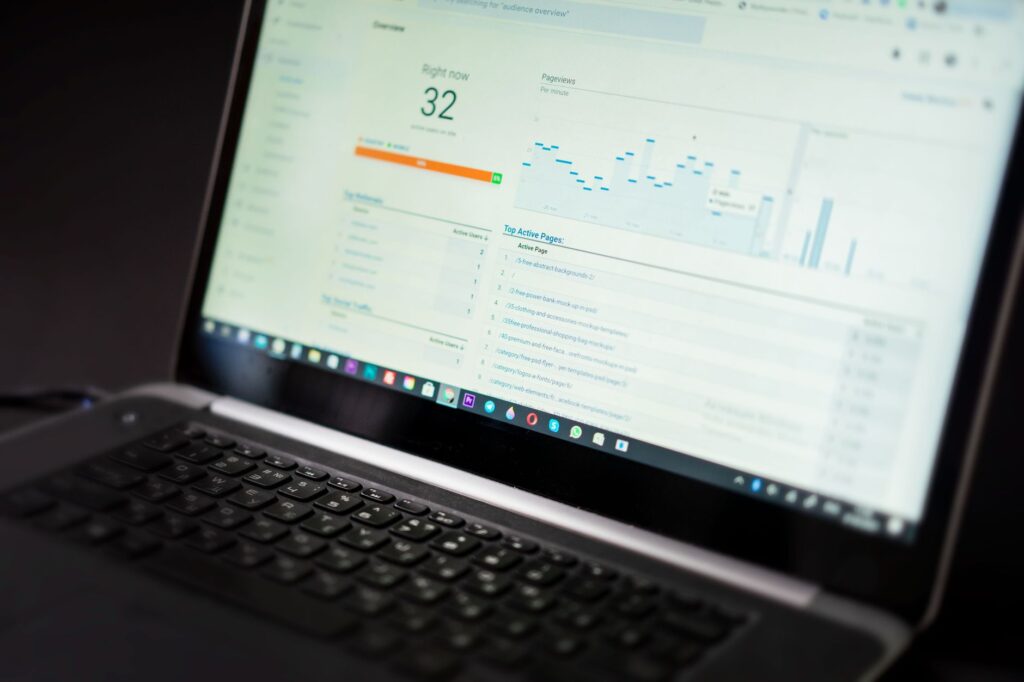
You measure digital marketing by defining the key events that matter (purchase, lead, call, WhatsApp click), tracking them in Google Analytics 4 and your ad platforms, and judging each channel by cost per customer and revenue, not by clicks or likes. Pick one source of truth and agree on it before the campaign starts.
Set up GA4 with your key events marked, link it to Google Ads and Search Console, and tag every non-Google link with UTM parameters so WhatsApp, email and influencer traffic does not show up as “direct”. Our GA4 guide covers setup, events and reports.
Attribution decides which channel gets credit for a sale. Google’s Analytics Help page says GA4 now offers three models: data-driven, paid and organic last click, and Google paid channels last click. First click, linear, time decay and position-based models were removed in November 2023 (Google Analytics Help).
The honest check is blended: total marketing spend divided by total new customers in the month. If that number improves, your mix is working, whatever each dashboard claims.
Digital marketing in India differs because buyers are overwhelmingly mobile-first, pay through UPI, prefer to talk on WhatsApp before buying, and increasingly use the internet in regional languages, with rural users now a majority. Campaigns built for desktop, English-only and card-checkout audiences will underperform here, however good the targeting.
Mobile first, really. TRAI’s June 2026 subscription data counts 1,087.50 million broadband subscribers, and 1,021.43 million of them are on mobile wireless access (TRAI). Design every ad, page and form for a phone first. Test on a mid-range Android on mobile data, not your office Wi-Fi.
Rural and regional. TRAI’s report for April to June 2026 puts rural telephone subscribers at 556.01 million out of 1,348.08 million (TRAI). The IAMAI report says rural India is growing almost four times as fast as urban (tele.net). Test Hindi and regional-language creatives early. They often win on cost.
UPI changes checkout. With UPI volumes in the billions every month (Outlook Business), a checkout without one-tap UPI is adding friction your competitors removed long ago. Cash on delivery still matters in many categories, so test it against prepaid incentives.
Meta’s developer documentation says WhatsApp Business Platform has charged per delivered message since 1 July 2025. From 1 October 2026, each business number gets 1,000 free service messages a month before charges apply, and utility messages inside the 24-hour window are no longer free (Meta).
One exception matters for ad-led businesses. When a user messages you from a Click to WhatsApp ad and you reply within the customer service window, a free entry point window of up to 7 days opens, covering marketing, utility, authentication and service messages. That makes Click to WhatsApp ads cheaper to follow up than broadcasts.
Regulation matters too. The DPDP Rules apply to your lead data, and ASCI rules apply to your influencer posts. Building consent and disclosure in from day one is cheaper than retrofitting it.
AI is changing digital marketing in three ways: ad platforms now automate targeting, bidding and even creative, content and analysis work takes hours instead of days, and buyers increasingly get answers from AI assistants instead of clicking search results. The marketer’s job shifts from operating buttons to feeding systems good inputs and judging outputs.
The IAMAI report found 44% of Indian internet users had engaged with AI-enabled features such as voice search, chatbots and AI filters (tele.net). Your buyers are already using AI. The question is whether it recommends you.
You start a career in digital marketing by learning one channel deeply, running real campaigns with real money (your own, a friend’s business or a non-profit’s), documenting the results, and then widening into strategy. Employers and clients hire proof of results far more readily than certificates alone.
The skills that matter, in rough order of demand:
Free certifications from Google and Meta help you learn the platforms. A portfolio showing “I took this account from X to Y” gets you hired. Keep a glossary open while you learn the jargon; ours is linked below.
The same mistakes show up across startups, SMBs and big brands. Most of them are about sequence: doing the right thing in the wrong order.
This plan suits a business starting from scratch or rebuilding after scattered efforts. It assumes a modest budget and a small team. Adapt the pace, not the order.
| Phase | Focus | Key actions | Done when |
|---|---|---|---|
| Days 1 to 30 | Foundations | Set goal and unit economics, interview customers, fix mobile site speed, set up GA4 key events and UTMs, claim Google Business Profile, write consent notices | You can see every lead and its source |
| Days 31 to 60 | Launch and test | Start one capture channel (search) and one create channel (social or video), launch WhatsApp or email follow-up, publish 4 to 6 pieces of buyer-focused content | You have a cost per lead for each channel |
| Days 61 to 90 | Scale what works | Kill losing ads and audiences, scale winners in steps, add retargeting, test a regional-language creative, feed sales outcomes back to ad platforms | You know your cost per customer and next quarter’s budget split |

Digital marketing rewards focus, not coverage. For most Indian businesses in 2026, the winning starter stack is Google search to capture demand, Instagram or YouTube to create it, and WhatsApp to close and retain, all measured by cost per customer. Get those three working before you add a fourth channel.
Every channel above links to its full PingTalks pillar guide. Read them in this order: the guide for your main capture channel (SEO or Google Ads), then your create channel (social media or Meta Ads), then your owned channel (email or WhatsApp). Pair them with these:
Yes, in everyday use the terms mean the same thing. Both cover promotion through search engines, social media, email, websites and messaging apps. Some people use digital marketing more broadly to include offline digital screens and SMS.
Start with Google search ads or local SEO to capture people already looking for you, plus WhatsApp for follow-up. Add Instagram or YouTube once those pay for themselves. The best channel is the one where your buyers already spend time and convert at a cost you can afford.
Paid search and social ads can produce leads within days of launch. SEO and content usually take several months to build traffic. Plan for a 90-day test period before judging the overall mix.
SEO earns unpaid visibility in search results and builds over time. Performance marketing is paid advertising judged by a measurable action such as a lead or sale. Most businesses use performance marketing for quick results while SEO builds a cheaper long-term source of customers.
No specific degree is required. Employers and clients look for proof that you can run campaigns and improve results. Free platform certifications from Google and Meta, plus a portfolio of real campaigns, are a practical way in.
Yes, if you collect personal data such as names, phone numbers or emails from people in India. The DPDP Rules, 2025 require a clear consent notice stating the purpose, with an 18-month phased compliance period from notification on 14 November 2025. Review your forms and consent wording with legal advice.

Digital Evangelist and Entrepreneur at Clickseek Digital. A results-oriented marketing leader with an 18+ year track record driving transformative growth for diverse global businesses. Expert in performance marketing, demand generation, customer acquisition, strategic partnerships, and market expansion within B2B SaaS, Consumer-Tech, Fintech, Travel/Hospitality, and CRM/ITES Solutions sectors. IIM alumnus with a strong analytical background and a string of accolades, including "Top 50 Most Influential E-Commerce Professional of India" and "Top 100 Digital Marketer of India."


What changed in marketing and AI, why it matters and exactly what to do. In your inbox at 11:00 IST.