


Content Marketing Guide 2026: Strategy, Blogging and Copywriting
The complete content marketing system for Indian marketers: strategy from search data, a blog brief template, copywriting formulas, AI rules and a 90-day plan.


The complete content marketing system for Indian marketers: strategy from search data, a blog brief template, copywriting formulas, AI rules and a 90-day plan.
01Content marketing is a strategic approach of creating valuable, relevant and consistent content to attract a defined audience and drive profitable action, as defined by the Content Marketing Institute.
02A content marketing strategy should start from search data, map every topic to a funnel stage and use the pillar and cluster model with descriptive internal links.
03Google says AI Overviews and AI Mode need no special optimisation: indexed, people-first pages with clear answers and named sources are what get cited.
04Google’s spam policies treat mass-produced generative AI pages without added value as scaled content abuse, so humans must own the angle, facts and final edit.
Content marketing is the practice of publishing useful articles, videos, emails and posts that attract a clearly defined audience, earn its trust and turn part of it into paying customers. You do not interrupt people with ads. You answer the questions they already search, and you get paid back in traffic, leads and repeat buyers.
This guide is the full system for 2026: a content strategy built on search data, a blog writing process with a brief template you can copy, copywriting formulas with Indian examples, rules for writing for Google and AI answers, measurement and a 90-day plan. It is written for Indian marketers and founders who need content that ranks and sells.
Content marketing is a strategic marketing approach in which you create and distribute valuable, relevant and consistent content to attract and keep a clearly defined audience, with the end goal of driving profitable customer action such as a sale, a lead or a renewal, instead of paying for every moment of attention you get.
That is a close paraphrase of the Content Marketing Institute (CMI) definition, and each word does work. Valuable means the reader would miss it if it vanished. Relevant means it fits one audience, not everyone. Consistent means you show up on a schedule, so trust compounds.
CMI also says the approach needs a documented strategy. That is the step most Indian SMBs skip, which is why their blogs stall at 20 posts. Content marketing covers any format your buyer consumes:
An ad rents attention for as long as you keep paying. A strong article keeps pulling search visits for years, and it makes your ads work harder because prospects already recognise your name when the ad appears.
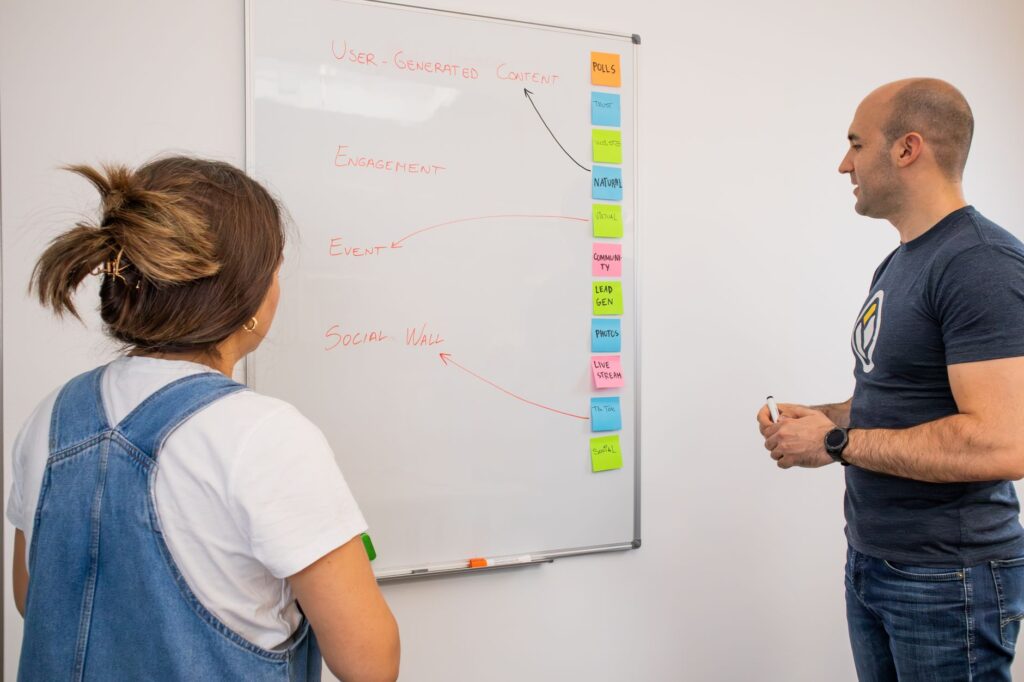
Content marketing works because buyers research before they buy, so the brand that answers their questions first earns trust before any sales conversation starts, and one helpful page can keep ranking for years while it feeds your social and email channels and pre-sells prospects. Your cost per lead tends to fall as the library grows.
CMI lists four business outcomes of excellent content:
The Indian numbers make the case sharper:
Read those together. India’s next customers are already online, they read and watch in their own language, and they expect short video. A plan that ignores any one of those three leaves demand for a competitor to collect.
You build a content strategy by defining one audience and one business goal, mapping the questions that audience searches at each buying stage, grouping those questions into topic clusters and committing to a publishing rhythm your team can sustain for at least two quarters. Write it on a single page so every writer, designer and freelancer works from the same plan and the same priorities.
Pick one primary reader. “Founders of Indian D2C brands selling on their own Shopify store” beats “small businesses” every time. Write down their job, budget, top three frustrations and where they spend time: LinkedIn, Instagram, YouTube or WhatsApp groups.
Then tie content to one measurable goal for the next two quarters. Demo bookings, store revenue or newsletter signups all work. “Brand awareness” alone does not, because nobody can tell you in March whether it worked.
Your buyers have already told you what they want to read. You just need to collect it. Our keyword research guide and free tools list covers the mechanics. Pull topics from these places:
A content plan full of awareness posts gets traffic and no revenue. A plan full of product pages gets no traffic. Map each topic so every stage is covered:
| Funnel stage | Reader question (example) | Best format | Metric to watch |
|---|---|---|---|
| Awareness | “What is GST e-invoicing?” | Guide, Reel, Short | Impressions, organic sessions |
| Consideration | “Best billing software for small shops” | Comparison post, case study, webinar | Email signups, return visits |
| Decision | “Brand X pricing” or “Brand X vs Brand Y” | Pricing page, demo video, testimonials | Leads, trials, sales |
| Retention | “How to set up recurring invoices” | Help docs, onboarding emails | Repeat purchase, churn |
Two excellent posts a month beat eight thin ones. Name one owner per piece, one editor and one designer. Put dates in a shared calendar, and protect the slot: content that slips once usually slips every month after.
The pillar and cluster model organises content around one broad pillar page that covers a head topic end to end, supported by cluster articles that each answer one narrower question in depth and link back up to the pillar, while the pillar links down to every cluster. Readers and search engines then see one complete, connected topic.
This page is a pillar for content marketing. The articles in the “Go deeper” section below are its clusters: headlines, blog SEO, e-commerce content, video and more. Our complete SEO guide uses the same structure for search.
To build your own cluster:
Anchors matter. Google’s SEO Starter Guide says link text tells both users and Google something about the page you link to, so “blog writing brief template” beats “click here”. Google’s AI features documentation also tells site owners to make content findable through internal links.

You write a blog post that ranks by following a five-stage process: a brief that fixes the reader, intent and angle; an outline built from real search questions; a fast first draft; a hard edit for clarity and proof; and an on-page optimisation pass before publishing. Skipping the brief is the most common reason blog writing fails.
The brief is a one-page contract between whoever plans and whoever writes. Copy this template into a Google Doc and fill every row before anyone opens a blank page:
| Brief field | What to write | Example |
|---|---|---|
| Working title | A specific promise, not a topic | How to Price a D2C Skincare Product in India |
| Focus keyword and variants | One main term plus 3 to 5 close variants | product pricing strategy; how to price products |
| Search intent | Learn, compare or buy | Learn, with a buy step at the end |
| Reader | One person, one situation | First-time founder about to launch on Shopify |
| Angle | What you know that the top results miss | A margin sheet from your own past launches |
| Must-answer questions | From People Also Ask and sales calls | Cost-plus or value pricing? Where does GST fit? |
| Proof | Data, screenshots, first-hand examples | Anonymised margin table, founder quote |
| Internal links | Pillar plus 2 to 4 related posts | E-commerce pillar, CRO guide |
| Call to action | One next step only | Download the pricing calculator |
| Owner and deadline | Writer, editor, publish date | Writer A, Editor B, 14 November |
Open the top five results for your focus keyword. Note the subtopics they all cover, then the questions none of them answer well. Turn each must-answer question into an H2 or H3. If a heading would not make sense as a search query, rewrite it until it does.
Put the answer in the first two sentences of the post and of every section. Write in short paragraphs, use “you”, and add your own examples, numbers and screenshots. Do not edit while drafting. A rough complete draft is worth more than a polished half.
Cut every sentence that a reader would skip. Check each number against its primary source, and delete anything you cannot verify. Read the intro aloud. Then rewrite the headline three ways and keep the most specific one.
Run this pass on every post before it goes live:
Pro tip: Write the call to action before you write the post. If you cannot name the one action a reader should take at the end, the brief is not finished.
The three copywriting formulas worth memorising are AIDA (Attention, Interest, Desire, Action), PAS (Problem, Agitate, Solution) and BAB (Before, After, Bridge), and each one is a simple sequence that moves a reader from noticing your message to acting on it. AIDA suits landing pages and long ads, PAS suits pain-led ads and emails, and BAB suits transformation stories.
| Formula | Structure | Best for | Watch out for |
|---|---|---|---|
| AIDA | Grab attention, build interest, create desire, ask for action | Landing pages, sales emails, video scripts | A weak first line kills the rest |
| PAS | Name the problem, make it sting, offer the fix | Performance ads, cold emails, WhatsApp messages | Over-agitating reads as fear-mongering |
| BAB | Show life now, show life after, explain how to get there | Case studies, Reels, social posts | The “after” must be believable |
The formulas are scaffolding, not a script. Run two versions of your first line in ads or email subject lines, keep the winner and only then polish the rest.
You write SEO content for Google and AI answers the same way: make it people-first, answer the question in the first lines, show real experience and named sources, and keep the important content in crawlable text, because Google says AI Overviews and AI Mode need no special optimisation beyond being indexed and eligible to show a snippet.
Google’s helpful content documentation gives you a practical checklist. The points that matter most for SEO content writing:
For AI answers, Google’s AI features page adds three useful facts. You do not need new machine-readable files, AI text files or special schema. AI Overviews and AI Mode use “query fan-out”, running related searches across subtopics, so pages that cover the subtopics around a question have more chances to be cited. And clicks from AI features are counted in the Search Console Performance report under the “Web” search type.
So the playbook is plain: one direct answer per section, clear headings, named sources and genuine expertise. Our AI search optimization guide covers getting cited by ChatGPT, Gemini and AI Overviews in more detail.
Warning: Do not bump the publish date on old posts without real changes. Google’s helpful content guidance lists changing dates to look fresh, when content has not substantially changed, as a warning sign.
Yes, you can use generative AI for content marketing safely as long as a human adds real value and stays accountable, because Google’s spam policies target scaled content abuse, meaning many pages generated mainly to manipulate rankings, rather than the use of AI itself. AI used to research, outline, draft or repurpose is fine. AI used to mass-produce unedited pages with little value is the risk.
Google’s spam policy names this directly as an example: using generative AI tools to generate many pages without adding value for users. Its helpful content guidance adds that you should disclose AI or automated generation where readers would reasonably expect it. A workable split for Indian teams:
Our explainer on generative AI for content creation covers where these tools save the most time.

Video advertising and repurposing turn one strong idea into many assets: you publish a long piece once, cut it into short videos, carousels, emails and posts, then put paid budget behind the cuts that already perform organically instead of shooting ads from scratch. Wyzowl’s 2026 report found 91% of businesses use video, so treat it as standard, not an experiment.
Length matters. In the same Wyzowl report, 51% of consumers picked 30 seconds to 1 minute as their preferred video length, and 71% picked somewhere between 30 seconds and 2 minutes. Write short. Here is one repurposing chain that works for a single pillar article:
For video advertising, do not shoot ads from scratch first. Wait a week, find the organic cut with the best watch time and saves, and boost that. You start paid with proof instead of a guess.
Distribute content through owned, earned and paid channels, in that order: your email list, WhatsApp and website first, then search, communities, creators and PR, and finally paid boosts behind proven winners, spending roughly as much time distributing each piece as you spent writing it, because content nobody sees earns nothing.
Mind consent when you build lists. India’s Digital Personal Data Protection Rules, 2025 were notified on 14 November 2025 with an 18-month phased compliance period. The government’s explainer says each notice must state the specific purpose for collecting data, and people can withdraw consent at any time. Build email and WhatsApp lists with clear opt-ins and an easy exit now.
Measure content marketing ROI by tracking each piece from visibility to revenue, using impressions and clicks in Google Search Console, engaged sessions and key events in Google Analytics 4, and leads and sales in your CRM, then dividing content-driven revenue minus content cost by that cost. Cost covers writing, design and distribution.
| Layer | Metric | Where to find it | Review |
|---|---|---|---|
| Visibility | Impressions, clicks, average position | Google Search Console Performance report | Weekly |
| Engagement | Engaged sessions, scroll depth, video watch time | Google Analytics 4, YouTube Studio | Weekly |
| Conversion | Signups, leads, add to cart, purchases | GA4 key events, Shopify or CRM | Monthly |
| Revenue | Pipeline and revenue from content-touched leads | CRM with UTM and first-touch source | Quarterly |
Here is the arithmetic with illustrative numbers. Say you spend ₹1,50,000 in a quarter on writers, design and boosts, and your CRM shows ₹4,50,000 of revenue from leads whose first touch was content. ROI is (4,50,000 minus 1,50,000) divided by 1,50,000, which is 2, or 200%.
Content compounds, so judge it on two quarters, not two weeks. Set up tracking properly first with our GA4 guide, and tag every link in emails and social posts with UTM parameters.
Create content for Indian audiences by matching the language, script and tone your buyers actually use, which is often a regional language or Hinglish rather than formal English, because IAMAI and Kantar’s Internet in India Report 2024 found 98% of internet users accessed Indic-language content. Rural India now makes up about 55% of all users.
The same report found that about 57% of urban users prefer regional-language content too. So this is not only a rural play. Practical rules:

Use this plan if you are starting from zero or restarting a stalled blog. It assumes one owner and around 8 to 10 hours a week.
Content marketing in 2026 rewards depth, proof and distribution, not volume. Build one pillar and its clusters properly, write every post from a brief, speak your buyer’s language, including Hinglish, and give each piece as much distribution time as writing time. Teams that publish less but better will own both Google results and AI answers in their niche.
Search-led content marketing usually needs two quarters before you can judge it fairly, because new pages take time to be crawled, indexed and trusted. Email, WhatsApp and social distribution can bring traffic in days. Review leads and revenue per piece at 90 and 180 days.
Publish only as many as you can write from a full brief, with real proof and a proper edit. For most Indian SMBs that is two to four posts a month. Google says it has no preferred word count or volume, so quality and coverage matter more than frequency.
Content marketing is the overall system of planning, creating, distributing and measuring content that attracts and keeps an audience. Copywriting is the skill of writing words that persuade a reader to act, such as ad text, landing pages and emails. Good content marketing uses copywriting at every call to action.
Not by itself. Google’s spam policies target content produced at scale mainly to manipulate rankings, however it was made. AI-assisted content that a human edits, fact-checks and improves with first-hand experience can rank, and Google suggests disclosing AI use where readers would expect it.
Write in the language your buyers search and speak. The IAMAI and Kantar Internet in India Report 2024 found 98% of internet users accessed Indic-language content. Hinglish in Roman script works well for social and ads, while full regional-language pages suit markets where search demand already exists.
You can start with free tools: Google Search Console for queries and rankings, Google Analytics 4 for engagement and key events, Google Docs for briefs and a shared calendar. Add a keyword research tool, a design tool for carousels and a CRM with UTM tracking as you scale.

Digital Evangelist and Entrepreneur at Clickseek Digital. A results-oriented marketing leader with an 18+ year track record driving transformative growth for diverse global businesses. Expert in performance marketing, demand generation, customer acquisition, strategic partnerships, and market expansion within B2B SaaS, Consumer-Tech, Fintech, Travel/Hospitality, and CRM/ITES Solutions sectors. IIM alumnus with a strong analytical background and a string of accolades, including "Top 50 Most Influential E-Commerce Professional of India" and "Top 100 Digital Marketer of India."



What changed in marketing and AI, why it matters and exactly what to do. In your inbox at 11:00 IST.